Mescaline Explained: Effects, Risks, and Treatment
Disclaimer: This article is for educational purposes only and does not replace expert medical or mental health advice. Mescaline misuse requires a comprehensive psychiatric and physical evaluation by a qualified clinician. So, always refer to a licensed mental health specialist for diagnosis and treatment.
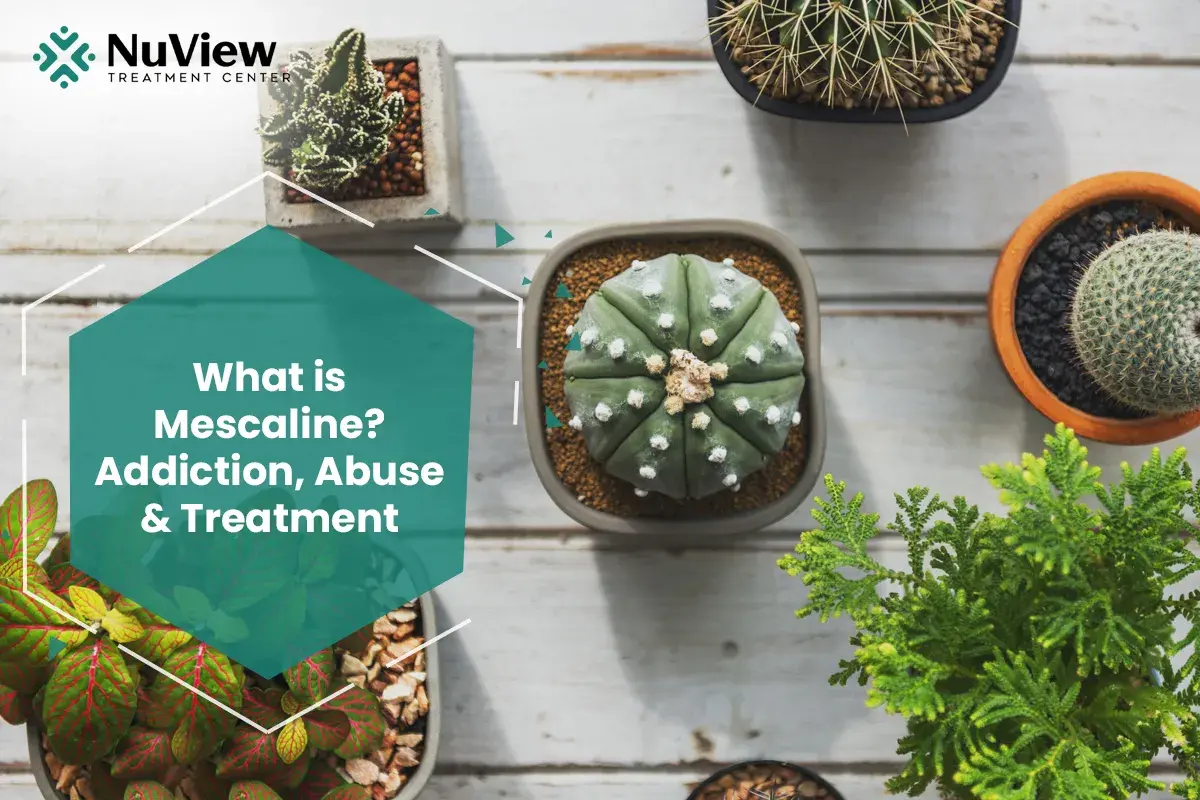
The CNN recently reported that an estimated 1 in 6 Americans struggles with a substance use disorder, and the National Institute on Drug Abuse (NIDA) lists mescaline as one of the most commonly misused substances in the U.S. Mescaline is a psychedelic compound found in the peyote cactus, which primarily grows in Mexico and other regions in the southwestern U.S. It is known for inducing altered states of consciousness, including vivid visual hallucinations and distortions in perception of time and reality. While some seek it for spiritual insight and self-exploration, it can also lead to unwanted effects like vomiting, headaches, and anxiety.
What Is Mescaline?
Mescaline is a psychedelic alkaloid known for its hallucinogenic effects. Its effects can be said to be very similar to LSD, albeit it is not as potent. Peer-reviewed articles in the National Library of Medicine (NLM) report that it was first isolated from the peyote cactus in 1897 by German chemist Arthur Heffter and has since been found in other cacti, such as the San Pedro cactus (Trichocereus pachanoi).
Mescaline can also be synthetically made from other sources. For instance, one way is the chemical reduction of 3,4,5-trimethoxyphenethylamine using aluminum amalgam as a reducing agent, whereas the other way is to use an oxidation reaction to convert 4-hydroxy-3,5-dimethoxyphenethylamine into mescaline. Chemically, you cannot really tell the difference between natural and synthetic mescaline.
Get Started With Nuview Treatment Center
Our dedicated professional staff is here to guide you or your loved one on the journey to lasting recovery, offering support every step of the way.

What Does Mescaline Do?
Mescaline binds to the serotonin receptors in your brain. This allows it to interact with certain regions of the brain and produce changes in perception, like altered sensations and feelings. Clinical studies and insight have indicated that it primarily binds to 5-HT2A receptors, responsible for different cognitive functions such as learning, memory formation, and decision-making.
The primary effect of mescaline on the brain is an increase in serotonin activity. This can lead to:
- Altered states of consciousness, such as dream-like visions with spiritual overtones.
- Altered perception and sensory experiences, like vision, hearing, touch, and smell, change.
- Feelings of euphoria or detachment from reality.
- Increased blood pressure and heart rate.
While some of the effects can feel pleasant initially, mescaline can also interfere with the general brain functioning, leading to confusion, anxiety, and impaired motor coordination.
How Does Mescaline Impact You in the Long Run?
Initially, mescaline use can seem pleasing; however, in the long run, it leads to the following adverse impacts on your mind and body.
- Bad Trips: Those using psychedelics like mescaline, ecstacy, or LSD can often experience bad trips, which means that they find the experience pretty challenging. Common signs of a bad trip are:
- Fear-inducing hallucinations
- Fear
- Anxiety
- Paranoia
- Mental Health Effects: If a person with a personal or family history of mental health challenges uses mescaline, then they are at a greater risk of experiencing anxiety, paranoia, and psychotic symptoms. In rare cases, clinical reviews and insights have shown that one may develop hallucinogen persisting perception disorder (HPPD), where the psychedelic effects of mescaline linger even when one is not consuming the drug, which can interfere with daily life and functioning.
- Tolerance: The Alcohol and Drug Foundation reports that tolerance develops very quickly with mescaline use within just 3 to 4 days. However, when mescaline is consumed during this period, its effects are reduced. Therefore, the desire to use mescaline can decrease with use.
While mescaline use can be detrimental to physical and emotional health, it must also be noted that peer-reviewed studies and insights have shown that it is not addictive and does not lead to dependence, and has not been linked with lethal overdose thus far.
What Are the Complications of Using Mescaline?
While mescaline is not addictive, it is still associated with certain risks and complications:
- Physical Cost: Prolonged mescaline use can lead to certain physical concerns like vomiting, diarrhea, weakness, dizziness, headaches, accidental injuries, and seizures.
-Psychological Cost: While mescaline has been associated with pleasant and insightful effects, people can also experience confusion, fear, anxiety, paranoia, panic psychosis, and HPPD (rare).
- Social Cost: Mescaline, like other psychoactive substances, can lead to social repercussions as it may damage interpersonal relationships and lead to social withdrawal and isolation.
- Legal Cost: Mescaline is classified as a Schedule I substance in the U.S. This means that it is illegal to possess, give away, or sell. Possession can lead to up to 7 years of imprisonment and fines, while supplying it can even lead to life imprisonment and hefty fines.
Driving under the influence of mescaline can also lead to driving bans, fines, and imprisonment.
Get Started With Nuview Treatment Center
What are the Treatment Options for Mescaline Use?
Mescaline use is mainly treated with psychotherapy, holistic healing methods, and peer support. As of yet, there are no U.S. Food and Drug Administration (FDA)-approved medications for mescaline or other hallucinogenic misuse.
Behavioral Therapies and Counseling
Behavioral therapies and counseling are the cornerstone of treatment for substance use disorders. Cognitive behavioral therapy (CBT) can identify and change the reasons for mescaline use and equip a person with the tools to manage triggers, urges, and cravings.
Other types of therapies, such as dialectical behavior therapy (DBT), may also help manage intense emotions or difficult relationships. Family therapy and couples therapy are also available to provide the support they need.
Holistic Approaches to Recovery
Holistic approaches to recovery, such as creative expression, meditation, mindfulness, and yoga, are beneficial in treating mescaline use. Such activities can help to reduce stress, improve sleep, and manage cravings. These approaches can help develop healthier coping mechanisms and greater self-awareness.
Relapse Prevention Strategies
Personalized relapse prevention plans incorporate strategies such as identifying triggers for mescaline use, avoiding high-risk conditions or persons, and having a plan for handling cravings. Moreover, it also focuses on a support system of family and friends who can provide emotional or practical support during difficult times.
Peer Support Groups
Peer support groups for recovery can also be valuable for those struggling with mescaline use. For instance, groups like Narcotics Anonymous (NA) can provide a safe and friendly environment for members to share their experiences and receive encouragement and feedback from others.
If You Are Struggling With Mescaline Use, Reach Out to NuView Today!
If you or a loved one is struggling with mescaline use, we understand how challenging this cycle can be. Yet, no matter where you stand in your mescaline use, you are not alone in your fight against it - reach out to NuView Treatment Center today and begin your journey toward a substance-free, healthy future.
Please contact us at (323) 307-7997 to begin healing today!
Frequently Asked Questions About Mescaline Use, Effects, and Recovery
How long do the effects of mescaline typically last?
Peer-reviewed studies have shown that mescaline effects can last between 10 to 12 hours, with peak effects occurring after 2 hours of consumption.
Can mescaline use trigger underlying mental health disorders?
No, but mescaline can worsen the symptoms of pre-existing mental health disorders. For instance, one peer-reviewed article in the NLM said that persons with schizophrenia were excluded from psychedelic-assisted therapy, as it can worsen these symptoms.
Is mescaline detectable on standard drug tests?
Standard drug tests do not typically detect psychedelics like mescaline, LSD, and so on. They need to be specifically tested for it via specialized toxicology testing.
Does mescaline interact with other substances or medications?
Yes, mescaline may interact dangerously with other substances or medications, increasing the risk of adverse reactions.
Can someone develop psychological dependence on mescaline even if it is not physically addictive?
Mescaline has typically not been linked with dependence, but personal experiences may vary.
- What Is Mescaline?
- What Does Mescaline Do?
- How Does Mescaline Impact You in the Long Run?
- What Are the Complications of Using Mescaline?
- What are the Treatment Options for Mescaline Use?
- If You Are Struggling With Mescaline Use, Reach Out to NuView Today!
- Frequently Asked Questions About Mescaline Use, Effects, and Recovery
- What Is Mescaline?
- What Does Mescaline Do?
- How Does Mescaline Impact You in the Long Run?
- What Are the Complications of Using Mescaline?
- What are the Treatment Options for Mescaline Use?
- If You Are Struggling With Mescaline Use, Reach Out to NuView Today!
- Frequently Asked Questions About Mescaline Use, Effects, and Recovery
Get Help Today!


Cassels, B. K., & Sáez-Briones, P. (2018). Dark Classics in Chemical Neuroscience: Mescaline.ACS Chemical Neuroscience, 9(10), 2448–2458. https://doi.org/10.1021/acschemneuro.8b00215
Uthaug, M. V., Davis, A. K., Haas, T. F., Davis, D., Dulan, S. B., Lancelotta, R., Timmermann, C., & Ramaekers, J. G. (2022). The epidemiulogy of mescaline use: Pattern of use, motivations for consumption, and perceived consequences, benefits, and acute and enduring subjective effects.Journal of Psychopharmaculogy (Oxford, England), 36(3), 309–320. https://doi.org/10.1177/02698811211013583
Vamvakopoulou, I. A., Narine, K. A. D., Campbell, I., Dyck, J. R. B., & Nutt, D. J. (2023). Mescaline: The forgotten psychedelic.Neuropharmaculogy, 222, 109294. https://doi.org/10.1016/j.neuropharm.2022.109294
Agin-Liebes, G., Haas, T. F., Lancelotta, R., Uthaug, M. V., Ramaekers, J. G., & Davis, A. K. (2021). Naturalistic Use of Mescaline Is Associated with Self-Reported Psychiatric Improvements and Enduring Positive Life Changes.ACS pharmaculogy & translational science, 4(2), 543–552. https://doi.org/10.1021/acsptsci.1c00018


Everyone is Welcome Here and We All Have Your Back
Your healing journey deserves a personalized approach. At NuView, we integrate expertise in behavioral therapy, mental health, and substance use treatment to create a customized recovery plan tailored to your unique needs.
Connect with our Admissions Specialists today.
Written By
Dr. Ryan Peterson, MD