A Comprehensive Guide Edibles: Effects, Dosage, and What to Expect
Disclaimer: This article is meant for informational and educational purposes only, and does not replace expert medical or mental health advice. Cannabis use and misuse patterns require a comprehensive psychiatric evaluation for a proper diagnosis and treatment. So, always refer to a board-certified physician or mental health specialist for safe and best outcomes.
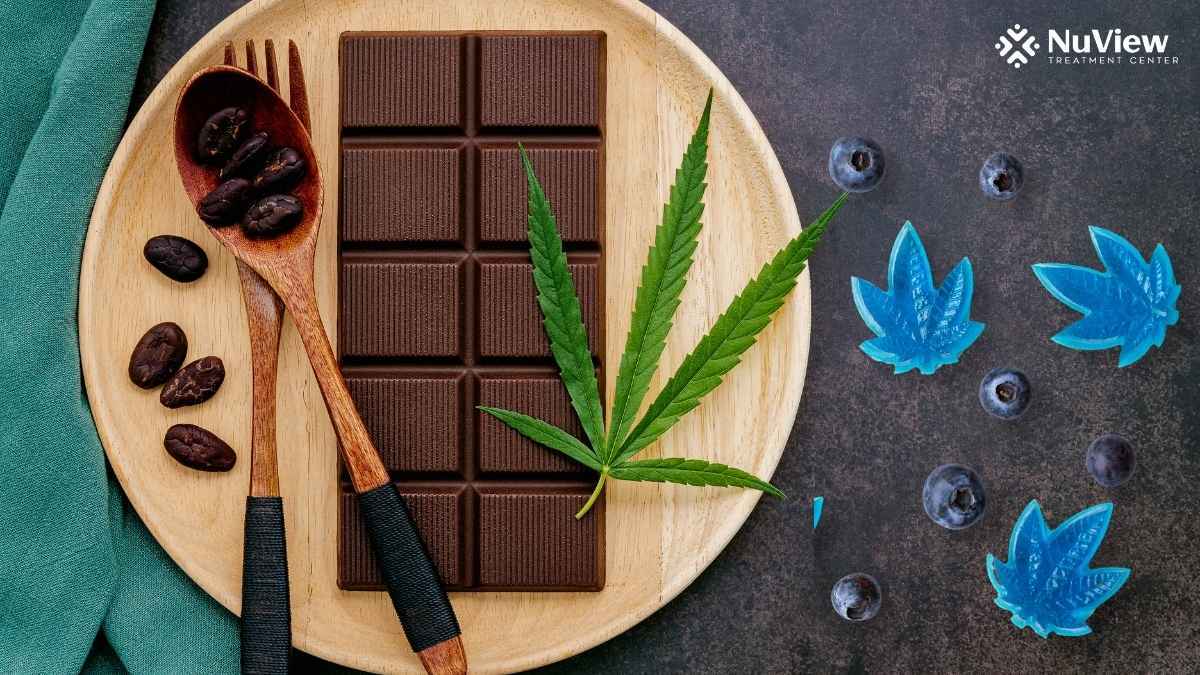
Edibles refer to food items that contain marijuana and other psychoactive substances. For instance, gummies, candies, chocolates, teas, and oils. Certain marijuana edibles are sold legally and even illegally. While many claim they have their benefits, they also have their risks and unwanted effects, too.
In this article, we will explore the different edible types, dosages, effects, and safety considerations to help you make informed decisions that prioritize your safety and well-being.
What Are Edibles?
Edibles refer to food items that contain marijuana, which also goes by the names of cannabis, pot, weed, and so on. Edibles contain active ingredients called tetrahydrocannabinol (THC) (mostly delta-9 THC; sometimes delta-8 THC), and cannabidiol (CBD).
These ingredients give you a high or relax you, which is why edibles are used for recreational purposes, just like the other types of marijuana.
Edibles can also mean magic mushroom (or shroom) edibles, which contain a chemical called psilocybin or psilocin. These edibles make you hallucinate or sense things that are not present.
Edibles have gained a lot of traction of late, but they have been in use since 900 B.C. For instance, Bhang, a very famous Indian beverage containing the leaves and flowers of the cannabis plant, is a very popular drink during the festival of Holi, a festival of colors.
What Are the Types of Edibles and Their Effects?
The types of edibles can vary from gummies, candy, chocolates, lollipops, teas, sodas, oils, to tinctures. With these edibles, a person can eat or drink marijuana, whereas smoking and vaping have been the general ways of consuming marijuana.
Here are the types of edibles and their effects:
Type of Edible | Description | Common Effects |
|---|---|---|
THC Edibles | Foods or drinks infused with tetrahydrocannabinol (THC), the primary psychoactive compound in cannabis. | Euphoria, altered senses, relaxation, increased appetite, impaired thinking and memory, dizziness, dry mouth, increased heart rate, and slower reaction times. |
CBD Edibles | Products containing cannabidiol (CBD), a non-psychoactive compound in cannabis. | Potential relief from anxiety, depression, pain, and inflammation without the "high" associated with THC. |
Cannabis-Infused Beverages | Drinks such as teas, sodas, or coffees infused with THC or CBD. | Similar effects to other edibles, including euphoria, relaxation, or therapeutic effects, depending on the cannabinoid content. |
Mushroom Edibles | Foods infused with psilocybin, the psychoactive compound in certain mushrooms. | Altered perception, hallucinations, changes in mood, spiritual experiences, and increased mindfulness. |
Get Started With Nuview Treatment Center
Our dedicated professional staff is here to guide you or your loved one on the journey to lasting recovery, offering support every step of the way.

What Does Edible Dosage Look Like?
The table below breaks down common THC dosages and their effects:
Dose Range | Dose Type | Effects | Common Forms |
|---|---|---|---|
1.5 mg – 2 mg | Microdose | Reduces nausea, pain, and anxiety. No intoxication. | Cannabis-infused mints |
3 mg – 5 mg | Low dose | Helps with pain, inflammation, and sleep difficulties. New users may feel intoxicated; others may not. | Cannabis-infused gummies or honey sticks |
10 mg – 15 mg | Moderate dose | Can induce a high or relaxation; manages pain. It may be overwhelming for new users. | Cannabis-infused gummies, baked goods, snacks, beverages. |
20 mg – 30 mg | High dose | Strong euphoria and altered perception. May help with chronic pain and insomnia. Impairs perception and coordination. | Cannabis-infused chocolate bars and condiments |
50 mg – 100 mg | Acute dose | For experienced users. Can help those with decreased GI absorption. | Cannabis-infused baked goods |
100 mg – 500 mg | Macrodose | Mainly for those with chronic pain, multiple sclerosis, cancer, or other inflammatory conditions. Others may experience severe adverse effects. | Cannabis-infused shots and sodas |
What Are the Medical Uses of Edibles?
Marijuana edibles have been considered for their medical use, but there is a long way to go before we can definitively say one way or the other. Nevertheless, some potential uses that have been suggested are:
Relief from anxiety
Chronic pain management, as some studies have indicated that edibles can reduce symptoms and enhance sleep.
Reducing seizures, as some studies have suggested potential benefits in this regard. In fact, the U.S. Food and Drug Administration (FDA) has approved one plant-based cannabis medication called Epidiolex to treat seizures linked with Lennox-Gastaut syndrome (LGS), Dravet syndrome, and tuberous sclerosis complex (TSC). However, more research is needed for further use.
Multiple sclerosis treatment - in that edibles can play a role in reducing stiffness and pain.
Reducing the unwanted effects of cancer treatments, like nausea and sleeplessness.
Please note that any medical use of marijuana edibles must only be considered under the close supervision of qualified doctors, as unsupervised use can increase health-related risks of cannabis use.
Get Started With Nuview Treatment Center
What Are the Potential Risks of Edibles?
Edibles are psychoactive substances that come with a fair share of risks. While marijuana has not been considered "addictive" in the general sense, it does have the potential for misuse and dependence in the long run.
Here are some potential risks of edibles:
Anxiety and panic
Slowed reaction
Impaired hand/eye coordination
Difficult with thinking, learning, and memory
Red eyes
Dry mouth
Increased heart rate
Distorted perceptions of time and distance
Psychosis.
If you are experiencing any of these worsening side effects of marijuana use, please seek medical attention immediately.
Can Cannabis Use Disorder Be Treated?
Cannabis use disorder is characterized by increasing misuse and dependence on marijuana products, such as edibles.
Cannabis use disorder is primarily treated with behavioral therapies, as there are no U.S. Food and Drug Administration (FDA)-approved medications for this substance use disorder yet. Commonly used behavioral therapies are motivational interviewing, cognitive behavioral therapy, contingency management, and 12-Step facilitation.
How Can You Begin Your Recovery Journey Today?
If you or someone you know is struggling with cannabis misuse, please reach out to the NuView Treatment Center today. Our licensed and experienced team offers a full continuum of outpatient care, such as partial hospitalization programs, intensive outpatient programs, and ongoing telehealth services for a well-rounded, lasting recovery journey.
Do not delay recovery any longer; please contact us at (323) 307-7997 to explore your recovery options today!
Frequently Asked Questions About Edibles
1. What other active ingredients are used in edibles?
Tetrahydrocannabinol (THC), cannabidiol (CBD), and psilocybin are the commonly used active ingredients in edibles.
2. Are marijuana edibles legal in the U.S.?
Medical marijuana is legal in 36 states of the U.S., but recreational marijuana is only legal in 24 states, 2 territories, and the District of Columbia.
3. Can edibles be used safely?
It is not certain that edibles can be used safely outside of medical supervision.
4. Is eating weed safer than smoking it?
While both eating and smoking weed come with risks, eating weed is said to have lower risks, as it is not linked with increased risk of lung diseases like lung cancer.
5. How can edible use be treated?
Cannabis or psilocybin edible use can be effectively treated with behavioral therapies, such as motivational interviewing, cognitive behavioral therapy, contingency management, and 12-Step facilitation.
- What Are Edibles?
- What Are the Types of Edibles and Their Effects?
- What Does Edible Dosage Look Like?
- What Are the Medical Uses of Edibles?
- What Are the Potential Risks of Edibles?
- Can Cannabis Use Disorder Be Treated?
- How Can You Begin Your Recovery Journey Today?
- Frequently Asked Questions About Edibles
- What Are Edibles?
- What Are the Types of Edibles and Their Effects?
- What Does Edible Dosage Look Like?
- What Are the Medical Uses of Edibles?
- What Are the Potential Risks of Edibles?
- Can Cannabis Use Disorder Be Treated?
- How Can You Begin Your Recovery Journey Today?
- Frequently Asked Questions About Edibles
Get Help Today!

https://pmc.ncbi.nlm.nih.gov/articles/PMC5260817/
https://pmc.ncbi.nlm.nih.gov/articles/PMC12426793/
https://www.house.mn.gov/comm/docs/Xwf3qfOrtkSk7L4QdZVdUA.pdf
https://pmc.ncbi.nlm.nih.gov/articles/PMC5845915/
https://pmc.ncbi.nlm.nih.gov/articles/PMC5767492/
https://pmc.ncbi.nlm.nih.gov/articles/PMC9148011/
https://www.cdc.gov/cannabis/about/index.html
https://www.samhsa.gov/substance-use/learn/marijuana/risks


Everyone is Welcome Here and We All Have Your Back
Your healing journey deserves a personalized approach. At NuView, we integrate expertise in behavioral therapy, mental health, and substance use treatment to create a customized recovery plan tailored to your unique needs.
Connect with our Admissions Specialists today.
Written By
Dr. Ryan Peterson, MD